Rust solo survival works when one player holds a monument and turns a parachute and a friendly neighbor into a full wipe
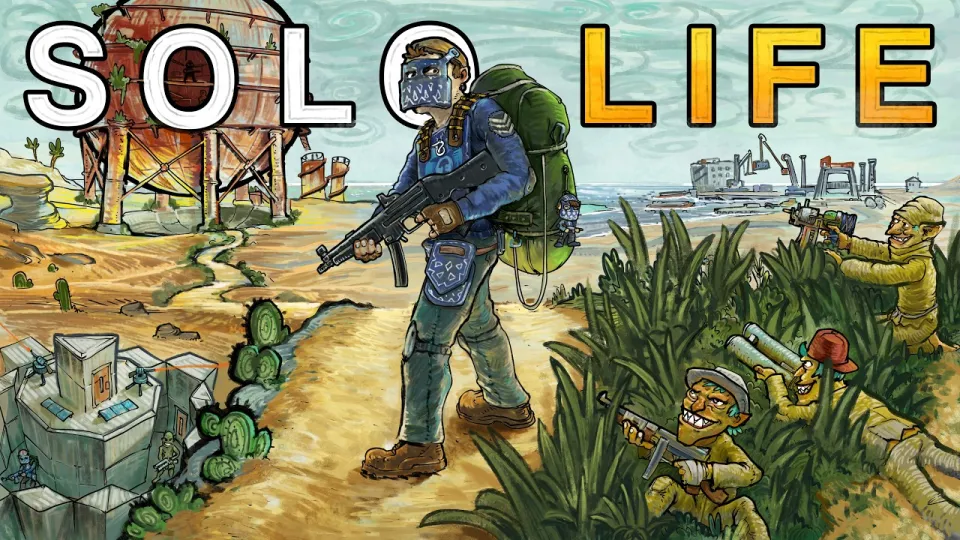
Video: Rust - THE SOLO LIFE V16
You can order the same kind of articles for your own video to boost it on YouTube and Google. Just message the Telegram bot @sat_sit_bot. It writes articles around your video, embeds the video and publishes them on popular niche websites (no ads). Try it free: 50 articles on us.
· based on the channel Blooprint
Rust solo survival is about holding one valuable monument, keeping a small base that is cheap to defend, and using mobility like parachutes to reset fights you cannot win head-on — the exact loop Blooprint runs in The Solo Life V16. The episode follows a fully solo player who camps an OP monument, fends off several angry neighbors at once, and still finds time to raid back. Anyone who wants to pick up the sponsored game from the intro can grab a free bonus through the War Thunder registration link used in the video.
What the Rust solo life actually looks like in this episode
The Solo Life is Blooprint's long-running solo format, and V16 returns to it right after the A Solo's Journey series wrapped, which is why the comment section treats the upload as a comeback. The premise is simple: no teammates, no zerg backup, no clan farming crew. Everything from the first bow to the last rocket comes from one player's inventory.
That constraint shapes every decision in the run:
- Loot priority goes to monuments a solo can actually contest, not to clan-owned hotspots.
- Base design stays small and cheap, so losing a door costs minutes rather than a whole wipe.
- Fights are picked around escape routes — a parachute or a nearby safe zone matters more than raw DPS.
- Every raid is planned against a target that can be finished in one trip, because a solo has no second wave.
The result is a slower, tenser version of Rust than the group-content montages, and the audience response reflects that: viewers repeatedly say solo content is more enjoyable to watch than squad gameplay, even when the action is less constant.
Holding a monument alone against multiple neighbors
The central conflict of the episode is a monument hold — one player claiming a high-value location while several surrounding groups decide they want it. In Rust terms, that means constant scouting, roof camping, and the threat of a counter-raid the moment the solo player leaves his base undefended.
What makes a monument hold viable for a solo is preparation rather than raw skill:
- Stash spare kits nearby so a death does not end the session.
- Keep the approach to the monument mined and walled where the game allows it.
- Rotate loot out fast instead of hoarding inside the monument's radius.
- Track neighbor activity, because the push usually comes when the monument is quiet.
One recurring observation from viewers is that groups waste enormous time trying to punish a single player — three or four people spending ten to twenty minutes chasing one solo is time they are not spending on their own progression. That asymmetry is the solo's real advantage, and the episode leans into it deliberately.
Parachutes, Dome and Cargo Ship as solo loot routes
Mobility is the solo player's substitute for a teammate, and the parachute is the cleanest example. A chute drop lets you enter a monument from an angle nobody is watching, skip a contested staircase, or bail off a roof when a fight turns bad. In the episode the parachute is used both as an entry tool and as an escape hatch during the monument pressure.
The loot routes that show up around it are classic solo picks:
- Dome, which rewards vertical movement and a fast in-and-out run.
- Cargo Ship, a timed event that a single player can strip if he reaches it early and leaves before the counter-push.
- Small roadside monuments for low-risk scrap top-ups between bigger runs.
Stacking these routes is what keeps a solo base supplied with explosives. The pattern is to farm scrap and components on low-population routes, then convert them into raid tools before the neighbors convert theirs into a raid on you.
Defending a solo base during an online raid
The raid defense is the part viewers single out most. Two solo players end up holding a base together against a larger attacking group — not a formal duo, just two people who happen to be in the same place at the same time and both want the base to survive.
A solo base defense comes down to a short checklist:
- Keep a defensive kit and spare weapons in a separate, harder-to-reach room.
- Use narrow angles and doorways so numbers matter less than positioning.
- Repair and reseal during lulls instead of chasing kills outside.
- Accept that some loot will be lost and protect the core first.
The friendly neighbor in this run is widely praised in the comments as the standout of the episode, and the reason is structural: in solo Rust, one competent stranger who decides to help is worth more than a whole squad of unreliable allies. The episode ends up redeeming a rough start largely because of that cooperation.
Why night fights still go wrong even with night vision
Night vision is supposed to solve darkness, and in practice it rarely does. A running joke in the comments is that activating night vision still leaves the screen nearly unreadable, and that matches how most solo night fights actually play out: silhouettes, muzzle flashes, and a lot of guessing.
Practical takeaways for solo players who get caught after dark:
- Treat night as travel time, not fight time, unless you have a clear positional advantage.
- Use sound and monument lighting to track opponents rather than relying on the green tint.
- Carry a light source for the moments when visibility matters more than stealth.
- Avoid long rotations on foot at night when a parachute or a shortcut is available.
The same logic applies to editing and pacing: the episode's fast cuts during fights are there because raw night footage is genuinely hard to follow, a detail viewers noticed and appreciated in the comments.
Common questions solo players ask after watching
The most frequent doubts in the comment section are about sustainability rather than mechanics. Can one player really hold a monument long-term? How do you keep a small base from becoming a free raid target? Is it worth teaming up with a random neighbor?
Short answers that hold up in practice:
- A monument hold is temporary by nature; the goal is to extract value before the push arrives, not to live there forever.
- A cheap base with layered doors and a hidden loot room survives longer than a big, obvious compound.
- Informal cooperation with a neighbor works when both players stay solo and share only what they can afford to lose.
- Raiding back is the strongest deterrent a solo has, because it proves the base is not a passive loot pinata.
Viewers also ask whether the solo format will continue; the channel's own comment confirms solo videos are the focus going forward, which is why V16 lands as a statement rather than a one-off.
Useful links
- War Thunder free bonus, PC and consoles
- War Thunder free bonus, mobile
- Blooprint on Twitch
- Blooprint on Kick
- Blooprint on TikTok
Final takeaway on solo Rust
The Solo Life V16 makes the case that solo Rust is a discipline rather than a handicap: hold a monument only as long as it pays, keep the base cheap enough to lose, and treat mobility and one reliable neighbor as force multipliers. Blooprint, the channel behind the series, structures the episode so that the raid defense and the parachute plays carry the narrative instead of raw kill counts. For anyone grinding a wipe alone, the practical lesson is to plan every fight around an exit and every raid around a single trip. If you want to support the channel, the sponsor link above — grab the free War Thunder bonus here — is the one used in the video itself.
Key takeaways
- Blooprint's The Solo Life V16 shows a fully solo run built around holding one OP monument while multiple angry neighbors try to push him out.
- Key solo tools in the episode: parachute drops for repositioning, the Dome and Cargo Ship as loot routes, and a compact starter base instead of a clan compound.
- The run includes an online raid defense where two solo players hold a base together against a bigger group.
- A friendly neighbor becomes the unexpected MVP, helping turn the wipe around after early setbacks.
- Night fights stay chaotic even with night vision, a recurring complaint in the comments under the video.
Questions & answers
Can one player really hold a monument in Rust against groups?
Yes, but only for a limited time. A solo holds a monument by extracting loot fast, stashing spare kits nearby and leaving before the counter-push forms. The value comes from the window of uncontested access, not from permanent ownership.
Why do groups waste time chasing a single solo player?
Because a solo is visible and annoying, and groups often treat punishing a neighbor as a priority over their own progression. That habit costs them ten to twenty minutes per attempt while the solo keeps farming elsewhere, which is exactly the asymmetry solo players rely on.
Is it worth teaming up with a random friendly neighbor as a solo?
Informal cooperation can decide a raid defense, as it does in this episode. The rule is to stay independent, share only expendable gear and never hand over core loot, since the alliance usually lasts one fight rather than a whole wipe.
How do you deal with night fights when night vision barely helps?
Treat darkness as travel time rather than combat time. Track opponents by sound and monument lighting, carry a light source for the moments visibility matters, and use parachutes or shortcuts instead of long night rotations on foot.
Source: Rust - THE SOLO LIFE V16 · Markdown version